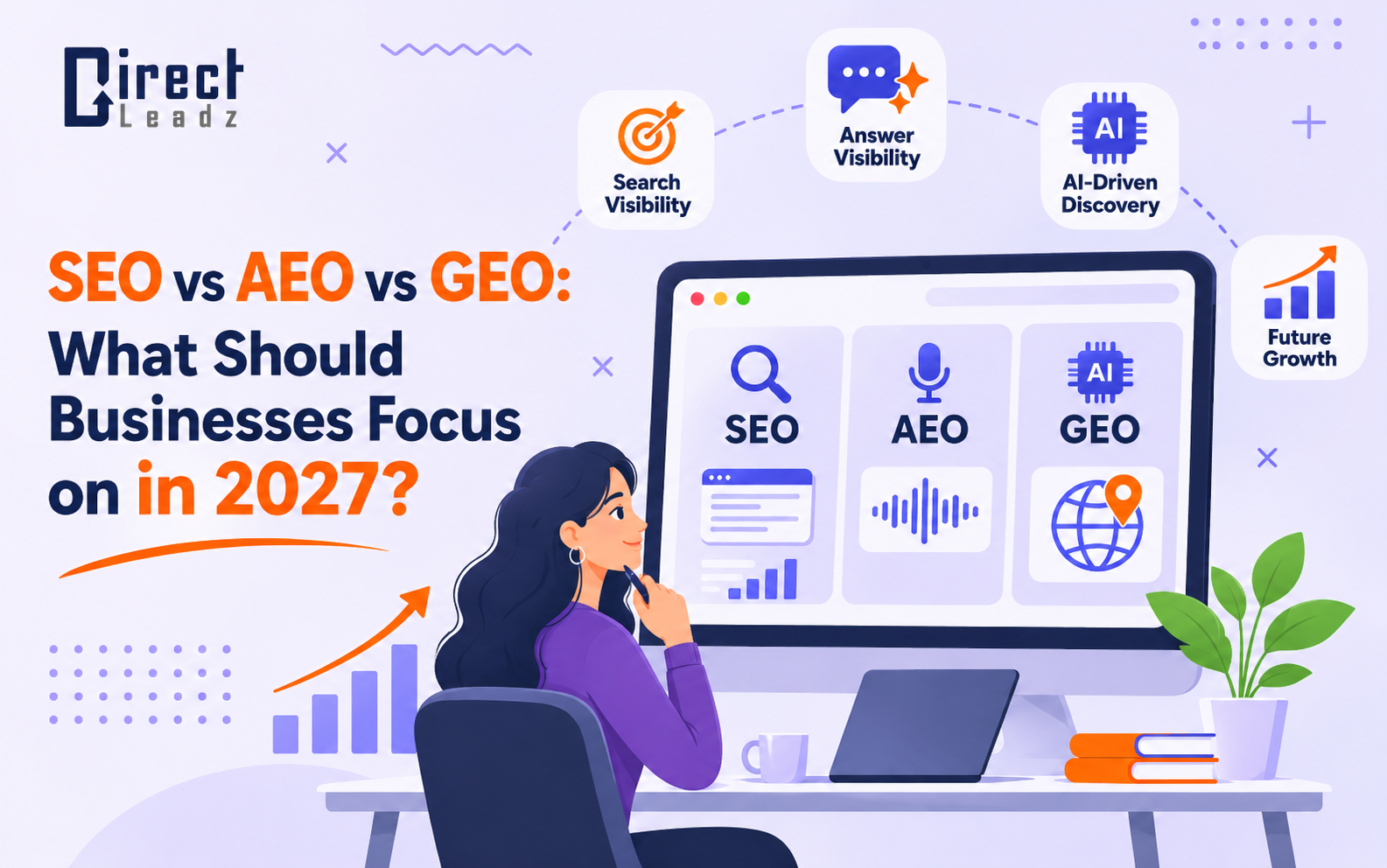
Ask three marketers what AEO and GEO mean and you may get three different answers. The acronyms are new, the confusion is real, and some agencies are happy to sell you a “GEO package” before explaining what’s in it.
Let’s clear that up. This post walks through SEO vs AEO vs GEO in plain language, then shows what we’d put first if we were running a small or mid-sized business.
SEO: still the base layer
SEO is search engine optimization. You’re making it easier for Google and Bing to find your pages, understand them, and decide they deserve to show up for a search.
That means a fast, tidy site, content that matches what people are really looking for, and trust signals like links from other reputable sites. Local businesses also need a well-kept Google Business Profile.
Why bother? People who search are often ready to act. Someone typing “emergency plumber near me” isn’t window shopping.
AEO: being the answer
AEO means answer engine optimization. Ranking is only part of the goal here. You want your text to be the piece that gets lifted out and shown as the answer, whether that’s a featured snippet, a voice assistant reply, or a box at the top of the results.
A few habits help:
- Write headings the way customers phrase the question
- Answer it in the first sentence or two underneath
- Use short lists and tables where they fit
- Add structured data so machines can read what a page is about
GEO: getting mentioned by AI tools
GEO is generative engine optimization. It’s about being named or cited when tools like ChatGPT, Gemini, Perplexity or Google’s AI Overviews put an answer together.
Nobody outside those companies knows exactly how sources get chosen, and anyone who claims otherwise is guessing. What does seem to hold is that clear, well-supported content from recognizable brands gets picked up more often. So expert authorship, original information and mentions of your business on other trusted sites all help.
Side by side
| SEO | AEO | GEO | |
| Main goal | Rank in search results | Be chosen as the direct answer | Be mentioned or cited in AI answers |
| Where it shows | Search result pages | Snippets, voice, answer boxes | AI chat tools and AI summaries |
| Key tactics | Technical health, content, links | Question-based content, clear answers, structure | Expertise, original data, brand mentions |
| Results timeline | Gradual and steady | Gradual, built on SEO | Still emerging, harder to measure |
They aren’t three separate projects
Most of the work overlaps. A page that loads fast, is written by someone who knows the subject, answers a real question, and gets mentioned elsewhere helps you in all three areas.
For a smaller business, a separate budget for each acronym is rarely needed. One joined-up plan does more.
What to do first in 2027
- Get the basics right. Speed, mobile layout, a structure search engines can crawl, and no broken pages.
- Collect real questions. Sales calls, support emails, and reviews are full of them. Those are your topics.
- Put names and proof on your content. Authors, case studies, customer reviews, your own numbers.
- Get mentioned elsewhere. Industry directories, partner sites, local press, and active social profiles.
- Measure. Check Search Console, look for referral traffic from AI tools in your analytics, and now and then ask those tools about your category to see who appears.
Good SEO services cover the first two points and keep them going month after month. If your own team is stretched thin, a digital marketing agency can also look after content, paid ads, and reporting under one plan.
Where to start, by business type
- Local service businesses: SEO first, plus your Google Business Profile, reviews and clear service pages.
- Online stores: Better product details, honest reviews, and category pages that answer buyer questions.
- B2B companies: Expert guides and case studies that show you know the field.
Mistakes we keep seeing
- Dropping SEO because “AI is replacing search”
- Buying a package that promises guaranteed AI mentions
- Publishing piles of thin pages just to cover more keywords
- Tracking nothing, then guessing what worked
How Direct Leadz approaches this
We start with your goals and your current data, build a plan, then revisit it as search keeps changing. Our search engine optimization and digital marketing pages explain what that looks like in practice.
For a wider view, read our post on how digital marketing can generate leads and sales.
Final Thoughts
The noise around SEO vs AEO vs GEO makes this sound harder than it is. The core idea hasn’t changed: publish helpful, trustworthy content that both people and machines can understand.
If you’d like help building that plan, the team at Direct Leadz is ready to talk.Contact us to get started.